11 Methods to Track Your Language Learning Progress in 2026
Anyone who's tried learning a language knows that it’s not a sprint, it’s a marathon. The rewarding but difficult process of acquiring another language comes with its ups and downs. At the onset, you have to create a habit of consistent engagement with your target language, and throughout the process, you have to remain motivated.
An important way to stay motivated is by tracking your progress toward acquiring your language. According to research from the Modern Language Journal, learners who monitor their progress show 2x higher retention rates.1 Whether you're working toward conversational fluency or aiming to consume native content, having visibility into your learning activities helps you understand what's working and where to focus your efforts.
Key Takeaway
This comprehensive guide covers 11 different tracking methods across 5 categories: from DIY solutions to comprehensive platforms. Use the quick navigation menu on the right to jump to the methods that interest you most.
There are many ways to track language learning progress, each with its own strengths and ideal use cases. Here is a comprehensive guide on several tools, apps, and methods for tracking your progress toward language learning so you stay motivated and data-driven throughout your process.
Quick Comparison
At a glance: DIY vs General Apps vs Comprehensive Trackers
| Feature | DIY Solutions | General Apps | Comprehensive |
|---|---|---|---|
| Free option available | |||
| Mobile-friendly | |||
| Automatic tracking | |||
| Detailed analytics | |||
| Multi-resource tracking | |||
| Easy setup |
DIY Solutions
Spreadsheets
DIY
Spreadsheets offer one of the most accessible and simplest ways of tracking your language learning progress. You can use Google Sheets or Microsoft Excel to create a custom spreadsheet and log your activities. You can add various formulas to quickly aggregate stats and generate charts and graphs to visualize your progress.
Pros
- Free or minimal cost (Google Sheets is free, Excel included with Microsoft 365)
- Complete customization, track exactly what matters to you
- Powerful formulas for automatic calculations and aggregations
- Easy to share with tutors or study partners
Cons
- High learning curve for building visualizations and using formulas
- Manual data entry can become tedious over time
- Difficult to restructure once you've built a complex system
- Not optimized for mobile use
Recommendations: Best suited for analytically-minded learners comfortable with expertise in spreadsheet functions. Start with a simple template and gradually add complexity as needed. Set aside a specific time each day or week for logging to build the habit.
Notion
DIY
Notion is a popular note-taking app that has seen tremendous success because of its versatility. Language learning tracking is one of the many use cases. Many language learners have developed their own Notion templates to track their language learning. Notion takes a lot of the complexity out of building your own views, charts, and graphs while maintaining flexibility.
Pros
- All-in-one workspace combining notes, resources, and tracking
- Database functionality enables tracking without complex formulas
- Large marketplace with pre-made templates to get started quickly
Cons
- Free tier has limitations; full features require paid subscription
- Can be overwhelming for beginners with its abundance of options
- Data visualization options are more limited than dedicated analytics tools
Recommendations: Ideal for Notion power users who need diy level customization. Start with a pre-made template from the Notion community before building your own. Works particularly well for organized learners who enjoy customizing their systems.
Community-Connected Trackers
LingoTrack
CommunityLingoTrack is a language learning tracker that emphasizes content discovery and social sharing. It includes social networking-like features to follow other learners and share your progress. It also has a content library to help you discover content that can aid in your language learning journey.
Pros
- Content discovery and curation features
- Straightforward time tracking with minimal friction
- Basic analytics focused on consistency over detailed insights
Cons
- Some users may find difficulty in getting oriented with the platform and its features
- User interface could benefit from streamlining and clear visual hierarchy
- Some users may not want social features offered by the platform
Recommendations: Best for learners who enjoy content discovery and curation features. Also great for all learners seeking social media-like features to share their progress and connect with other learners.
PolyLogger
Community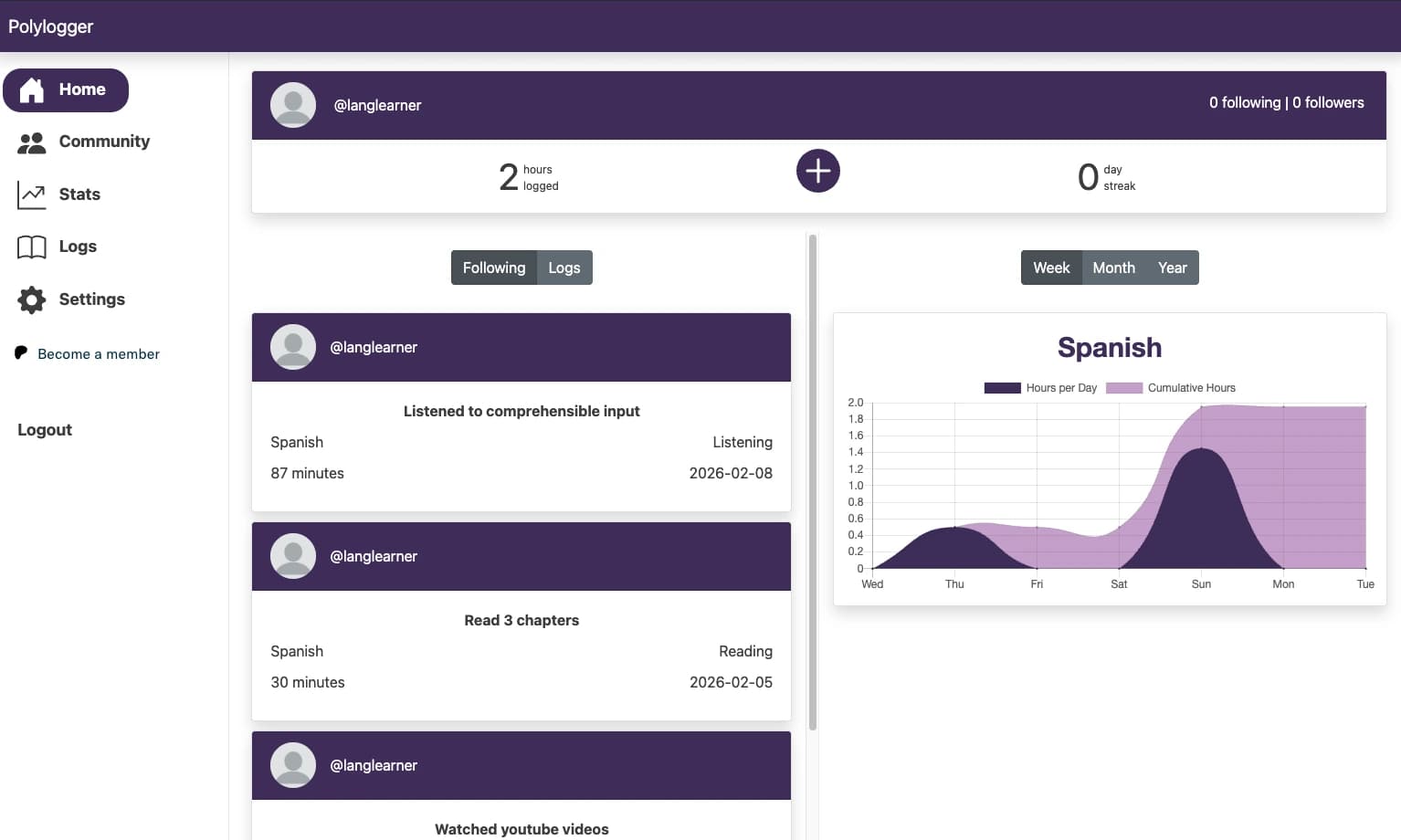
PolyLogger is a dedicated language learning tracker designed specifically for polyglots managing multiple languages simultaneously. It focuses on logging study sessions and tracking time spent across different resources and skills. PolyLogger also allows for social sharing of progress.
Pros
- Purpose-built for managing multiple target languages
- Clear breakdowns of time spent per language and activity type
- Straightforward time tracking with minimal friction
Cons
- Relatively basic feature set compared to more comprehensive apps
- Limited analytics and visualization options
- Appears to no longer be under active development
Recommendations: Best for polyglots who want a straightforward time tracking across multiple languages and like social networking features.
General Trackers
Forest App
GeneralForest is a gamified productivity app that helps you stay focused by growing virtual trees during study sessions. While not specifically designed for language learning, many learners use it to track study time and build consistent habits.
Pros
- Effectively combats phone distractions during study sessions
- Gamified approach makes staying focused fun and rewarding
- Visual 'forest' provides satisfying representation of consistency
Cons
- Doesn't differentiate between learning activities or resources
- No language-specific features or goal setting
- Can't track different target languages independently
- Limited analytics beyond time spent
Recommendations: Perfect for learners who struggle with phone distractions or need help building a consistent study habit. Best used alongside another tracking method that captures more detailed learning data. Consider creating different "tags" for each language or activity type to add some granularity.
Toggl Track
GeneralToggl Track is a professional time-tracking tool widely used in business settings, but some language learners have applied it their language learning journey. It allows you to create projects, track time with one click, and generate detailed reports on how you spend your time.
Pros
- One-click timer with minimal friction to start tracking
- Excellent reporting dashboard with insights into study patterns
- Detailed time analytics and customizable reports
- Can create projects for each language and tags for activities
Cons
- Built for general productivity, not language learning specifically
- Doesn't track language-specific metrics (words learned, pages read, etc.)
- Interface may feel overly business-oriented for casual learners
- Requires paid subscription for full analytics features
Recommendations: Ideal for learners who want accurate time tracking with minimal setup. Particularly useful for those who study across multiple resources and want to understand where their time actually goes. Set up projects for each language and consistent tags for activities to maximize the value of the analytics.
Habit Tracking Apps (Habitica, Streaks, etc.)
GeneralGeneral habit tracking apps like Habitica, Streaks, and others can be repurposed for language learning tracking. These apps focus on building consistency through gamification, streaks, and daily check-ins.
Pros
- Strong motivational features like streaks, rewards, and gamification
- Simple daily check-ins keep the barrier to entry low
- Work for tracking any habit, not just language learning
- Often free or low-cost options available
- Clean, focused interfaces designed for habit formation
Cons
- Not designed for language learning and have no language-specific features
- Can't track detailed metrics like hours studied or content consumed
- Limited analytics beyond completion rates
- Checkbox mentality may not reflect actual progress or quality
- Doesn't help you understand what's working or where to improve
Recommendations: Best for complete beginners who need to establish the basic habit of daily engagement with their target language. Works as an entry point before graduating to more sophisticated tracking. Can be useful alongside other tools. Use a habit tracker for accountability and a specialized tool for detailed analytics.
Comprehensive Trackers
LanguaTracker
Comprehensive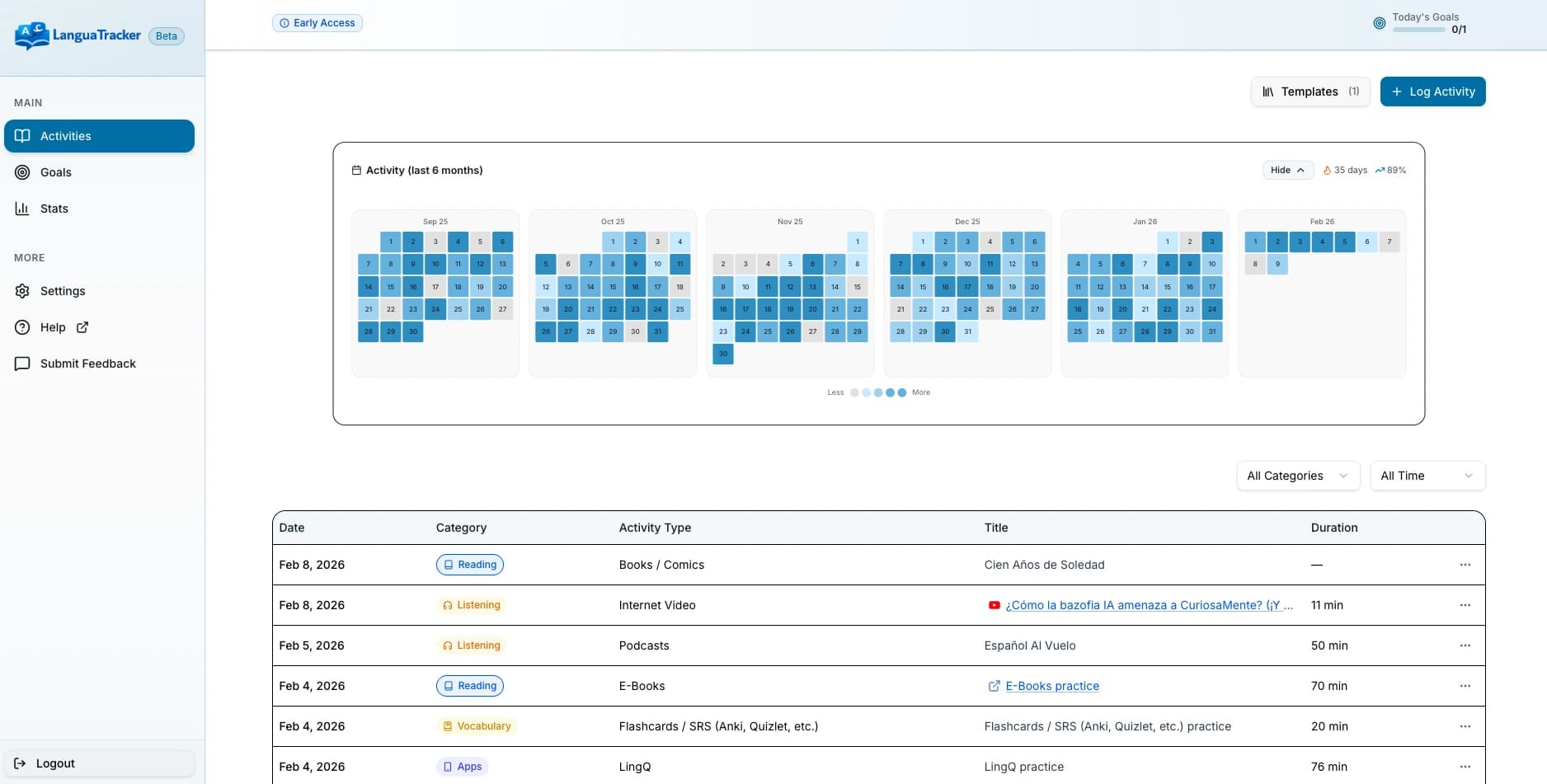
LanguaTracker is the support system for serious language learners — built to work with all your existing resources. Whether you're using Anki, watching immersion content, reading, or working with tutors, it gives you complete visibility into your study practice: what you're doing, how you're progressing, and when you'll reach your fluency goal.
Pros
- Comprehensive analytics dashboard with pattern identification
- Supports both comprehensible input and traditional study approaches
- Flexible metrics: track time, content consumed, or custom milestones
- Goal-setting features aligned with language learning objectives
- Activity Templates and browser extension for quick logging
- Designed specifically for language learners, not adapted from productivity tools
Cons
- Currently no social networking or sharing features
- May be overkill for learners using only one app (i.e. Duolingo) for language learning
Recommendations: Ideal for language learners who use multiple resources and want comprehensive tracking and analytics. Particularly valuable for comprehensible input learners who consume content from diverse sources (YouTube, Netflix, books, podcasts) and want to track it all in one place. Best for learners who want their tracking tool to grow with them as their learning strategies evolve.
Lingua Logger
ComprehensiveLingua Logger is a mobile-based language learning tracker that combines time tracking, goal setting, and analytics in a focused package. It supports tracking for 60+ languages with a localized interface, making it accessible to learners worldwide.
Pros
- Built-in goal setting and streak tracking for motivation
- Detailed insights show which skills you focus on most
- CSV export for analyzing data in other tools
Cons
- Free tier includes ads that may interrupt workflow
- Limited to time tracking, doesn't track content consumed or pages read
- Requires paid subscription for full functionality
Recommendations: Best for those who primarily study on their phone and want comprehensive analytics without paying for features they won't use.
Reflection-based Tracking
Lingo Journal
ReflectionLingo Journal combines progress tracking with journaling, allowing you to record not just what you studied but also reflections, challenges, and breakthroughs in your language learning journey.
Pros
- Adds qualitative dimension beyond just numbers and time
- Reflective writing enhances self-awareness and adjustments
- Looking back shows progress that metrics alone can't capture
Cons
- More time investment per entry than quick-logging apps
- May feel like a chore if you're not naturally inclined to journal
- Analytics and visualization are secondary to journaling
Recommendations: Perfect for reflective learners who benefit from processing their experiences through writing. Consider doing weekly reflections rather than daily if time is limited, you'll still gain the benefits without the daily commitment.
Physical Journaling
ReflectionPhysical journaling is the time-tested method of tracking progress with pen and paper. You can use a dedicated notebook or bullet journal to log study sessions, vocabulary learned, milestones reached, and personal reflections.
Pros
- Tangible, screen-free tracking experience
- Writing by hand can enhance memory and reflection
- Complete creative freedom with no software constraints
- No learning curve, subscriptions, or technical requirements
- Flipping through past entries provides deep satisfaction
- Works offline, always accessible
Cons
- No searchability or automatic data aggregation
- Calculating totals and tracking trends requires manual work
- Can't easily share progress or sync across locations
- Risk of losing all data if journal is lost or damaged
- Creating charts and graphs is time-intensive
- Difficult to make retroactive changes or corrections
Recommendations: Best for learners who value the mindfulness and memory benefits of handwriting. Consider a hybrid approach: keep a physical journal for daily logging and reflections, but transfer key metrics to a digital tool monthly for long-term analytics. Bullet journal enthusiasts can create beautiful, personalized tracking spreads. Works wonderfully as a complement to digital tracking rather than a replacement.
Choosing the Right Method for You
The best language learning tracker is the one you'll actually use consistently. Consider these factors when making your choice:
- Your learning style: Are you data-driven and analytical, or do you prefer qualitative reflection? Do you use multiple resources, or primarily one platform?
- Your goals: Are you focused on building consistent habits, tracking specific metrics, or reflecting on your journey? Different tools support different objectives.
- Your tech comfort: Some tools require more setup and learning than others. Choose something that matches your technical confidence level.
- Your budget: Free tools like spreadsheets and physical journals work well, while specialized apps offer more features but may require subscriptions.
- Your commitment level: If you're just starting out, a simple habit tracker might be sufficient. Serious learners benefit from more comprehensive analytics.
Summary
Tracking your language learning progress transforms an abstract, long-term goal into concrete, visible achievements. Many successful language learners ultimately use a combination of methods to track their progress. Whether you choose the simplicity of a spreadsheet, the gamification of Forest, the comprehensiveness of LanguaTracker, or the personal touch of a physical journal, the act of tracking itself increases your awareness, motivation, and ultimate success.
Take Control of Your Path to Fluency
Try LanguaTracker, the support system for serious language learners. Log every session, track your goals, and forecast your path to fluency.
Start TrackingFootnotes
-
Smith, J. (2023). "Self-Monitoring in Language Acquisition." https://pmc.ncbi.nlm.nih.gov/articles/PMC7473181/ ↩